
philadelphia history
Neighborhood Histories: Graduate Hospital




Graduate Hospital, previously located on S. 18th Street between Lombard and South, is gone. However, its name lives on in the Philadelphia neighborhood located between South Street and Washington Avenue, from the Schuylkill River to S. Broad Street. For many years, the Graduate Hospital neighborhood, also known as Southwest Center City, played stepsister to its more affluent Rittenhouse neighbor. Now, this historic area is experiencing an explosion of new housing, shopping, upscale restaurants, and nightlife. We traced the history of Graduate Hospital to understand just how far the neighborhood has come.
Early History
Before William Penn laid out Philadelphia’s street grid, the area around what became South Street had already been settled by Swedes, part of the early Swedish presence along the Delaware River dating to the colony of New Sweden in the 17th century. When Penn established his city in the 1680s, he named the thoroughfare Cedar Street and made it the city’s southern boundary. As Philadelphia expanded beyond Penn’s original limits, Cedar Street was renamed South Street in 1854. By the early 20th century, the area had evolved again, becoming an important center of Black life, culture, and commerce in Philadelphia.
Christian Street, between S. Broad and 20th Streets, had a high concentration of Black physicians, pastors, architects and business owners. The area was designated the Christian Street/Black Doctors’ Row Historic District in 2022, becoming Philadelphia’s first historic district designated primarily for its Black history. In 2024, the City officially renamed this stretch of Christian Street “Black Doctors’ Row.”
By night, Black-owned theaters and cabarets on South Street presented jazz legends, including Billie Holiday. The Royal Theater, 1524 South Street, opened in 1920, featuring dancing, movies and nationally known stars like Fats Waller. By the 1950s, Pep’s Musical Bar, a nightclub at Broad & South, drew integrated audiences to hear jazz greats including Quincy Jones, Miles Davis, John Coltrane and Nina Simone.
The prosperity of Black-owned businesses on West South Street came to a screeching halt from the late 1950s into the early 1970s, when the City announced plans for a Crosstown Expressway. The unpopular project threatened to demolish properties along South and Bainbridge Streets from river to river. Although the project never happened, the damage had been done. Property values crashed. Businesses shuttered.
While East South Street, between Front and Broad Streets, managed to survive due to an influx of entrepreneurial hippies opening restaurants and boutiques in the late 1960s, West South Street did not fully revive until the 21st century. That’s when Children’s Hospital of Philadelphia (CHOP) expanded its footprint across the South Street Bridge into the Graduate Hospital neighborhood with the dazzling $3.4 billion Roberts Research Center towers. This fueled major residential real estate investment, turning the area into a highly desirable place to live and work.
What’s in a Name?
The Graduate Hospital name has roots that trace back to 1889 with the founding of the Philadelphia Polyclinic Hospital, which, in 1916, became known as Graduate Hospital. It was established as a clinical teaching facility for the University of Pennsylvania’s Graduate School of Medicine, merging with two other medical centers. The hospital closed in 2007, and the site became Penn Medicine at Rittenhouse. The continuation of Penn’s presence enhances the community, while the Graduate Hospital name lives on in the surrounding neighborhood.
Revitalization
The first signs of Graduate Hospital’s revitalization were the opening of new cafes, boutiques and bike shops on South Street, catering to an influx of young professionals and Penn graduate students.
Then came the large-scale renovation known as Naval Square, 2420 Grays Ferry Avenue, located near the small, formerly Irish-American neighborhood known as Devil’s Pocket. The site was home to the United States Naval Asylum, established in the 1830s. With its Greek Revival main building and former governor’s residence designed by William Strickland, the complex served multiple purposes over its long history, including as a retirement home for sailors and Marines.
Enter Toll Brothers, which purchased the property in 1988 and began construction in 2004. The developer officially dedicated the site on July 14, 2005, converting the historic landmark into a gated luxury condo development with more than 600 units. Its proximity to CHOP and Penn made it an attractive choice for medical professionals who could now walk or bike to work.
The demand for housing in Graduate Hospital is so strong that classic Philadelphia rowhomes are being converted into three-unit condos, while four- to seven-story condos and rentals are springing up throughout the neighborhood.
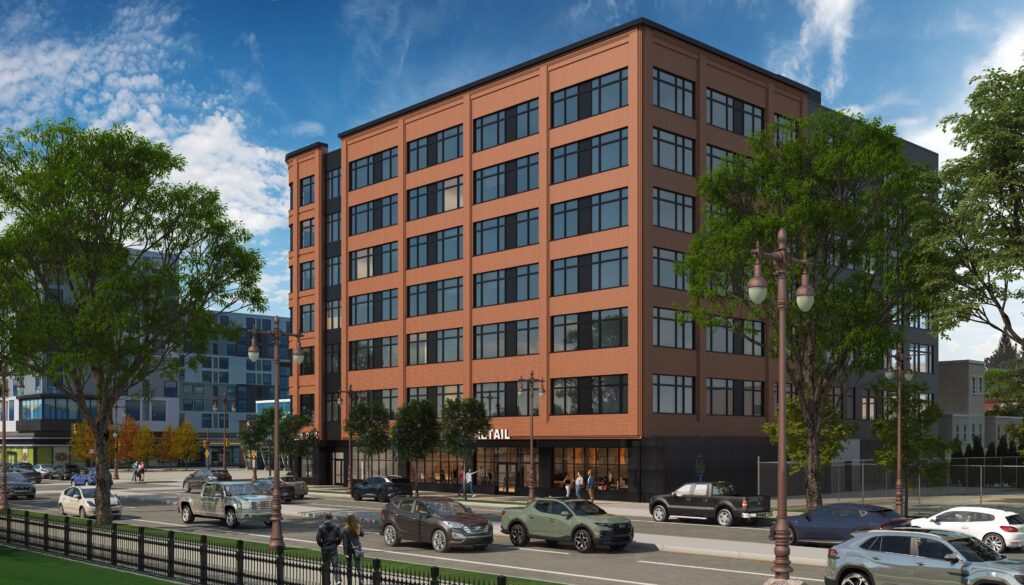
They include The Howell, 2101 Washington Avenue, a 247-unit mixed-use mid-rise sitting above an ALDI and CVS. It features a gym, coworking spaces, and rooftop terraces. Nearby, 1731 Washington Avenue, a converted warehouse with just 18 units, aims for the luxury market. 914 South Broad Street, a seven-story, 84-unit multifamily Dranoff building, is slated to open in 2027. All three buildings offer on-site parking, which in this heavily trafficked area is a Golden Ticket!
Perhaps the most interesting renovation is The Deacon, a boutique hotel and event space at 1600 Christian Street. Formerly the historic First African Baptist Church, a Gothic Revival-style church built in 1906, it was reimagined in 2019. Combining original architectural details, stained-glass windows, vaulted ceilings, and archways with contemporary design, it offers a unique space for workshops, meetings, weddings, and celebrations. With eight rooms accommodating up to 26 guests, it fills a niche not available in Philly’s large hotels.

However, some of the most sought-after locations in the Graduate Hospital neighborhood are neither new nor renovated. St. Albans Place, located between 23rd and 24th Streets and Fitzwater and Catherine Streets, far from the hubbub of South Street, has changed little since its creation in 1870, with three-story Second Empire houses facing a gated garden with original ironwork and fountains. (If it looks familiar, The Sixth Sense was filmed there.)
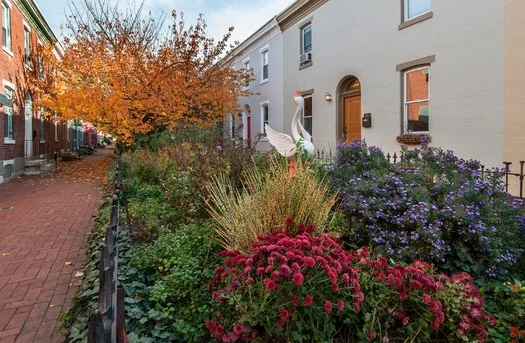
Two years later and one block away, the equally serene Madison Square was constructed for naval officers and their families. These pristine brick houses feature Italianate and Federal details and brick sidewalks, plus their own gated garden. While you could’ve snapped up one of these handsome townhouses for under $10K in the 1950s, current prices are in the six figures.
Goings On
Hungry? Ants Pants Cafe, 2201 South Street, offers scrumptious breakfast, brunch, and lunch options, including a croissant sandwich with mango-pineapple habanero jam, bacon, arugula, scrambled eggs, caramelized onions, and goat cheese, served with fries drizzled with garlic aioli. So, no, this is not your typical grab-and-go joint.
For those special nights, try Illata, 2241 Grays Ferry Avenue, an intimate 20-seat neighborhood BYOB with an open kitchen that has a private dinner-party feel with a gourmet edge.
Craving a side dish of glamour with dinner? Check out Rex at the Royal, 1524 South Street, located in the former historic Black theater, with sexy banquettes straight out of a Hollywood movie. Their casual Burger Wednesdays serve up a jumbo bacon cheeseburger, a shot and a beer for $19, while you best wear your Louboutins to their classy Friday and Saturday dinners.
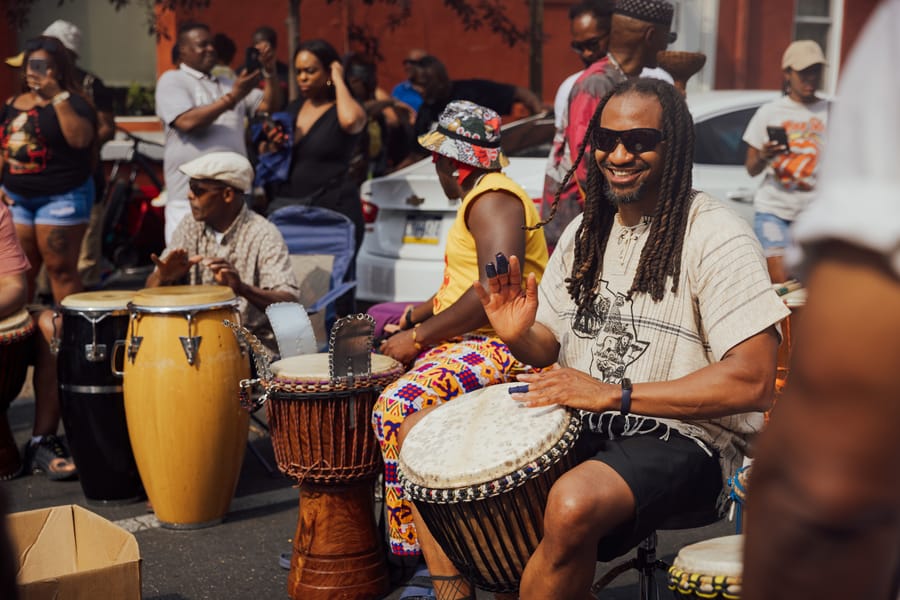
Other popular spots include the PHS Pop Up Garden (right on the boundary line at 1438 South Street!) sponsored by Solo Real Estate, featuring live music, cocktails, and everything you want to know about plants. Bob and Barbara’s, 1509 South Street, has live music every night and the longest-running drag show in Philly every Thursday night. The Clef Club, 736 S. Broad Street, presents jazz education, jams, and performances featuring Philly’s top musicians. The annual ODUNDE Festival, one of the largest African American street festivals in the nation, takes place along South Street and Grays Ferry Avenue in June.
Philadelphia has a wonderful way of reclaiming its past and breathing new life into historic neighborhoods. Graduate Hospital is a prime example, where Philadelphia history, architecture, restaurants, new development, and community all come together.
If this article piques your interest in living in Graduate Hospital, Philadelphia, explore our neighborhoods and contact a Solo Real Estate agent to help you find a home you love.