
architecture
The Oldest Building on Broad Street Reopens as the Village of Industry & Art




Hamilton Hall. Image by Mike Persico, courtesy of Scout.
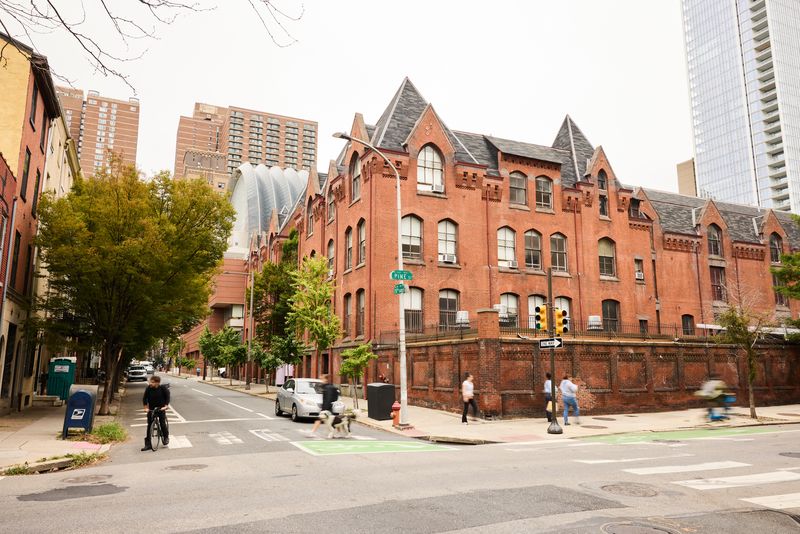
The sudden closure of the University of the Arts (UArts) in May 2024 rattled Philadelphia. As students scrambled to find new programs, local historians and preservationists worried about the fate of the iconic Greek Revival building on the northwest corner of Broad and Pine Streets.
Originally designed in 1826 by John Haviland and William Strickland for The Pennsylvania Institute for the Deaf and Dumb (the period’s terminology for what is now known as the Pennsylvania School for the Deaf), with a later addition in 1875 by Frank Furness, it has one of the finest architectural pedigrees in the City and is the oldest original structure on South Broad Street. In 1893, it became the Pennsylvania Museum and School of Industrial Art (affiliated with the Philadelphia Museum of Art) and, in 1964, it ended that affiliation and was renamed Philadelphia College of Art (PCA). When PCA merged with Philadelphia College of Performing Arts in 1987, it became University of the Arts (UArts).
As UArts, the building shaped the city’s cultural history, and it was a shock for many to see it close. Distinguished alumni include architect Julian Francis Abele, craftsman Wharton Esherick, photographer Irving Penn; figurative painter Sidney Goodman; choreographer Judith Jamison; actor/musician Jared Leto; and pianist Andre Watts.
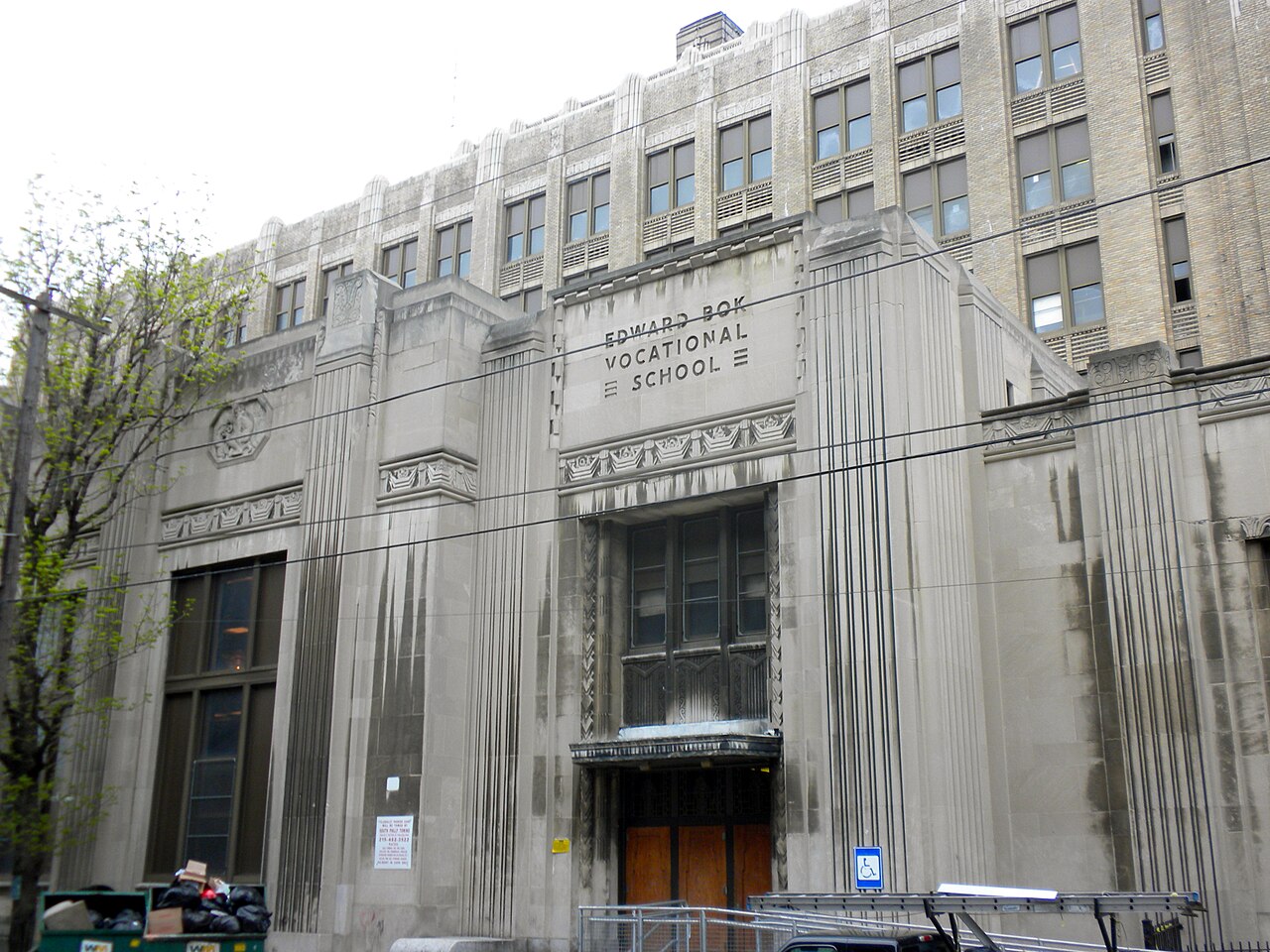
Fortunately, less than one year following UArts’s closure, the city breathed a sigh of relief when Hamilton Hall and the Furness Building were acquired by Scout/Urban Design, a nationally certified Women’s Business Enterprise (WBE) development and design company headquartered in the Bok. Managing partner Lindsey Scannapieco plans to duplicate the adaptive reuse her company successfully achieved at The Bok, 1901 S 9th St., for which Scout won the Urban Land Institute (ULI) Philadelphia Vision Award for adaptive reuse, mix of uses, and catalytic economic development. Bok is now home to 200 creative tenants with over 60% women or minority-owned businesses. Scannapieco visualizes VIA’s future as “…A mix of creative studios, cultural spaces, dining, and public programming that makes it a true creative village for Philadelphia.”
The former UArts buildings at Broad & Pine have been renamed the Village of Industry & Art (VIA), converting over 110,000 sqft and 1.9 acres into maker studios and spaces, plus affordable housing for artists and a potential residency program. That housing program realigns with Furness Hall’s original purpose as a dormitory. In addition, there are ceramic, woodworking, plaster, and metal shops available for leasing.
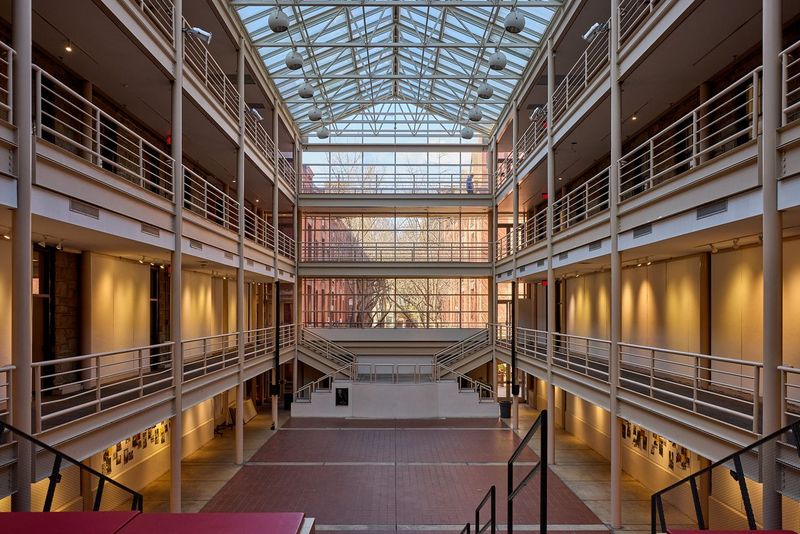
Scout intends to preserve the existing infrastructure for its tenants, instead of major renovations, other than safety and HVAC investments. They are seeking tenants who could fit the pre-existing spaces, such as a ceramicist in a room that already has a kiln. Like the Bok, most of the former classrooms feature good lighting and an open floor plan.
In May 2025, VIA hosted a UArts Celebration of Life, held in the building’s courtyard to commemorate the first anniversary of the school’s closure with performances, speakers, artwork, dance and theater. Rather than erasing the building’s history as a launching pad for the arts, VIA seeks to serve and support Philly’s creative community.

VIA’s soft launch this fall welcomes on board the following organizations: AIA Philadelphia, BlackStar Projects, Community Design Collaborative, DesignPhiladelphia, Monument Lab, and The Stained Glass Project. The inclusion of AIA (American Institute of Architects) is significant. Founded in 1869 on the third floor of the Athenaeum, it moved in 1966 to the Architects Building (now the Hotel Palomar) at 17th & Sansom, where it had a popular bookstore and charmingly quirky gift shop. Its subsequent move in 2008 to 1218 Arch St. took AIA off the path of many City residents and pedestrians, which ultimately led to the closing of its bookstore in 2018. By returning to the heart of Center City on the Avenue of the Arts, AIA reconnects with Philadelphia’s architectural and cultural community. AIA also kicked off their move to VIA on October 3, 2025, with its DesignPhiladelphia Festival, which honored 11 outstanding designers and firms who are making a lasting impact.
South Kensington-based Interface Studio Architects (ISA) designed VIA’s first public space, converting the 6,500 sqft courtyard between the Hamilton and Furness buildings into “Frankie’s Summer Club”, a secret garden serving wine and ice cream. Opening in June 2025, this welcoming garden was the setting for events introducing VIA to new tenants, the public, and UArts alumni.
Last March, Scannapieco launched a link where people could share information about how they want to be involved, whether they want to collaborate, lease space, or if they wished to offer their expertise to the project. To date, almost 600 people have responded, including former UArts alumni and faculty!
Want to see what it’s all about? The Village of Industry & Art invites the public to visit their Visioning Workshop room Wednesdays & Thursdays 4:00-6:00 pm; Sundays 2:00-6:00 pm until Nov. 3rd.