
philadelphia history
Philadelphia Rowhomes: Where Women’s Businesses Took Root



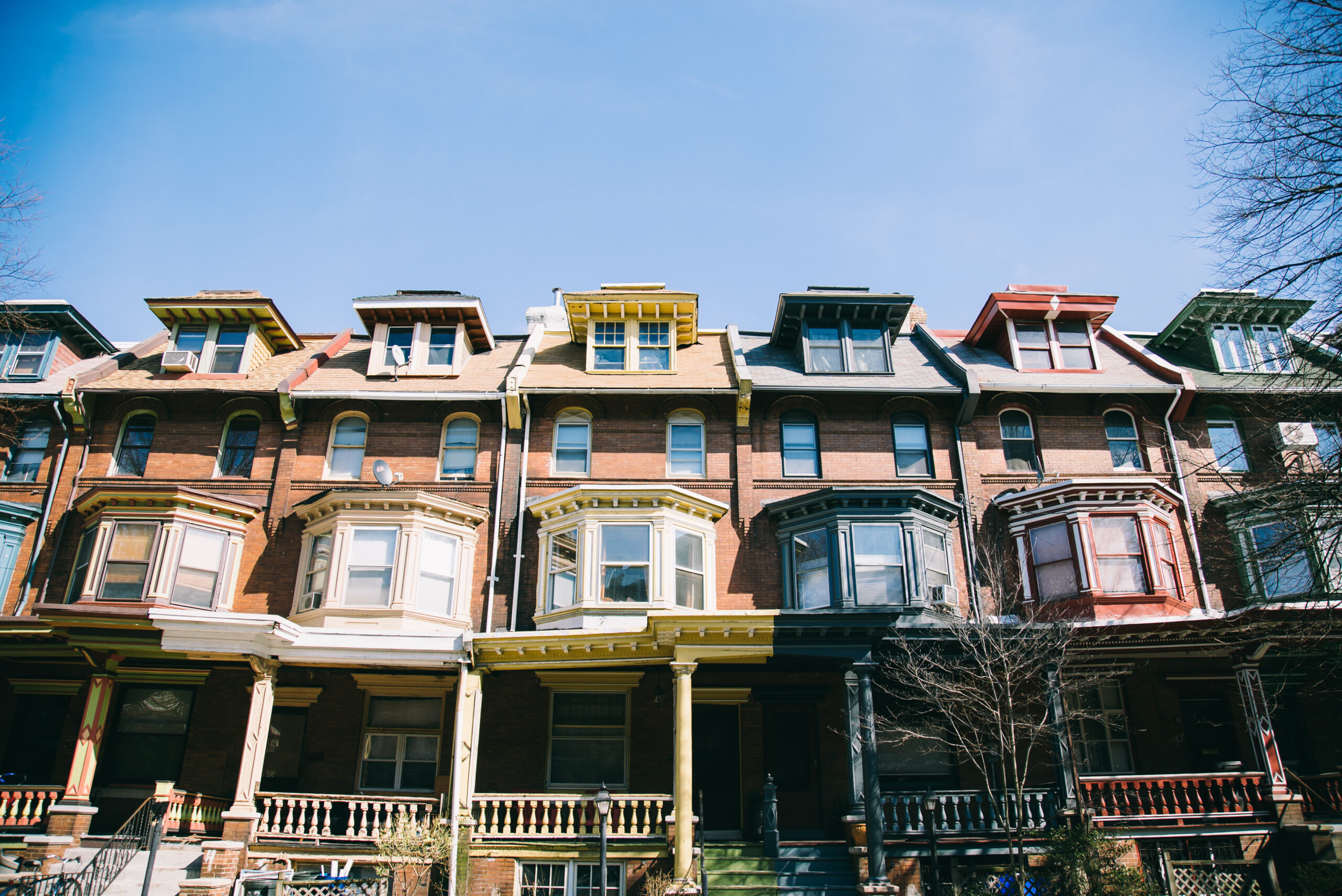
Row of colorful Philadelphia rowhomes. Image: Cory J Popp for Solo Real Estate
Philadelphia loves a rowhome. Or is it rowhouse? Disciples of each term, which describe the same kind of building style, interconnected houses lining a street or alley, fiercely debate which they prefer. But the original phrasing is even more specific and dates back to the 1800s, when “Philadelphia Row” became a catchall for the kinds of houses many Philadelphians lived in, and still live in today.
These houses haven’t just been domestic retreats from the busy streets of our city, however. For many female Philadelphians through history, rowhomes have also been the spaces in which the domestic combined with the economic, as women began to run businesses out of these neatly organized homes, entering the workforce without leaving their living rooms.
As a female-owned business proud of its commitment to gender equality, and as a real estate company, Solo Real Estate is doubly interested in the history of these row-home-based industries and the women who ran them. Exploring the past use of these buildings adds fascinating layers to both our understanding of our city’s past and our experiences as owners and renters.

Why run a business out of a house, you might ask? The answer lies in necessity and respectability, both in equal measure, more often than not. We talk a lot about women entering the workforce, but the truth is, women throughout history have always worked and contributed to, or were the sole breadwinners for, their families’ incomes. But for most women, that work was safest, most available, and easiest to access in the home. Jobs like mending, cleaning, dressmaking, paid childcare, accountancy, clerkship, and even writing and translating work would often be jobs that women would perform from their own homes. Selling baked goods, sewing up ball gowns, copying out documents, these were largely respectable labors and represent some of the early businesses run by women out of Philadelphia row homes. Tutoring, music lessons, and private instruction were also ways women made money and supported themselves from the security and comfort of their own living rooms. The writer of this blog post used to take private acting lessons in a row home on South Broad Street in the 1990’s!
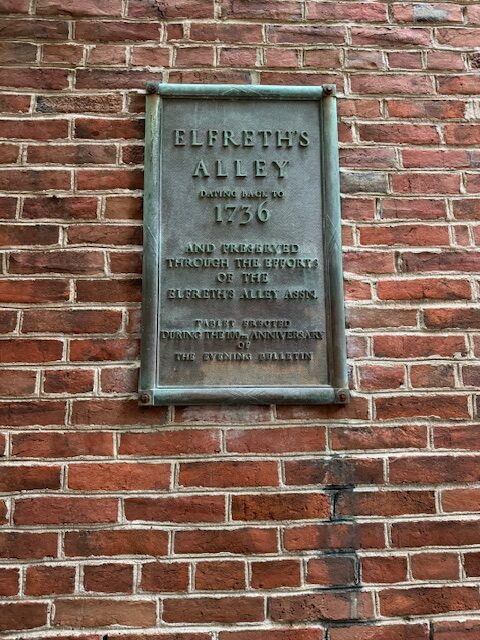

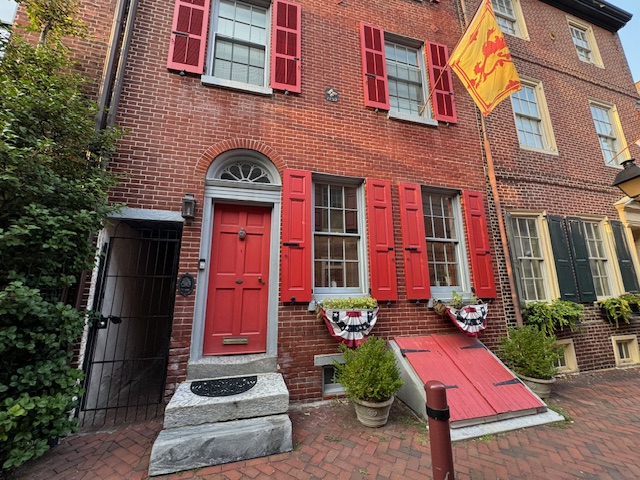
Some of these businesses even predate the American Revolution. In 1762, Mary Smith and Sarah Melton purchased what is now 126 Elfreth’s Alley and used it both as a residence and as their dressmaking shop. Melton ran this business, then known as a mantua maker, mantua being the term for the dress style popularized in the 1600’s, with Smith for four years until her death and then for 28 years, both on her own and with Elizabeth Carr, a divorcee who ran the business herself after Melton’s own passing. More information on this rare but not-unheard-of women-run business at the time can be found here: https://www.elfrethsalley.org/podcast/2020/6/23/episode-1-the-dressmakers

Not only did women run businesses out of Philadelphia row homes, but one row home actually became the center of Philadelphia’s struggle for women’s rights. When the New Century Club was founded in Philadelphia in 1878, it was one of the first women’s clubs in the country. Founded to give women a space to discuss science, literature, and the arts, it quickly became a space of organization, offering educational resources to women, serving as a meeting space for ideas, and turning towards social reform, civil rights, and women’s liberation. By 1882, Elizabeth Sproat Turner, a Philadelphia-born abolitionist and suffragette, along with other club members, founded the New Century Guild, an offshoot of the club dedicated to women’s labor, specifically. The goal of this club was to support working women, providing education and opportunities for women to turn their labor into a more stable and long-term vocation. Soon, this new organization demanded a headquarters. Where else but a Philadelphia row home? In 1906, the Guild purchased 1307 Locust Street, transforming it into a space that could meet the needs of the organization, which included bookbinders, nurses, secretaries, lawyers, artists, writers, and so many more professional women looking to help others professionalize. Offering classes, community, and support, the Guild was the center of social reform and women’s issues, and by the time it moved into 1307 Locust, it had over a thousand members. Today, this building is still a business run out of a rowhome, as it has been renovated and preserved, and functions as a boutique hotel now called Guild House Hotel.
As you walk down the majority of the streets of Philadelphia, you’ll encounter row home after row home. As you do, consider the women who lived and worked in these spaces, and the many stories we don’t know because these businesses often functioned outside of the official ideas of incorporation or professionalism, spheres often barred to women in the past.
The work done in living rooms and kitchens remains an essential part of the city’s social and economic history. Unearthing these stories teaches us more about Philadelphia’s past and the human experience and adds to the layers of time, painting our many historic row homes. Maybe even the one you live in today.