
philadelphia history
Neighborhood Histories: East Passyunk



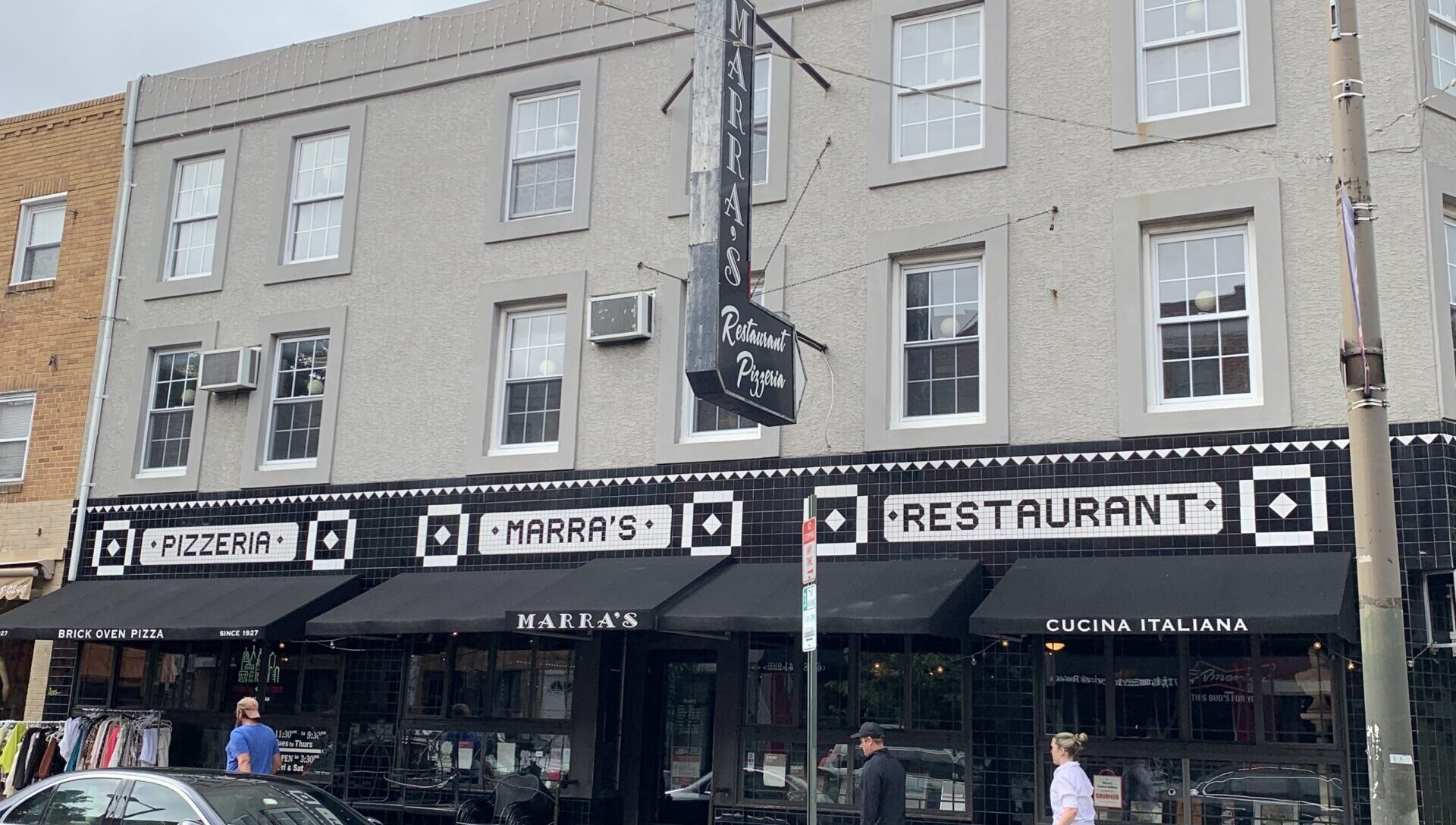
Image: Stephanie Aviles
East Passyunk has a history that predates the Colonial era. In fact, it existed long before the Mayflower or Columbus set sail. The neighborhood that is now Philly’s vibrant nightlife hub was home to the Lenni Lenape for over ten thousand years. Passyunk Avenue was originally their trade route. When William Penn arrived in 1682, he pledged to treat Native Americans equally and purchased land from them north of what is now South Street, land that would become Philadelphia. All of the land below South Street to the mouth of the Delaware River and west to what is now Point Breeze was Lenni Lenape territory. They named this area Passyunk, meaning “in the valley,” and Moyamensing, “place of the black cherry trees.”

Although Swedes settled within the upper Lenni Lenape territory, known as Southwark, in the mid-17th century, the peaceful Native Americans remained until they were forced out by William Penn’s son Thomas in the 1740s. Some resisted leaving and remained until the 1880s. The area stayed rural farmland through the 18th century, but later developed into an industrial and residential center in the early-to-mid-19th century before officially merging with the City of Philadelphia in 1854. Its image at the time, however, was that of an impoverished and dangerous area. No wonder the City chose it as the site of Moyamensing Prison at 10th and Reed, built in Egyptian Revival style in 1835. Demolished in 1967, it is now home to an Acme.
From the mid-19th century to the dawn of the 20th century, mass migration reshaped East Passyunk as freed slaves and Irish, German, Eastern European, and Italian immigrants arrived seeking jobs. Not surprisingly, the construction of affordable row houses between 1850 and 1900 coincided with this influx. “The neighborhood was built as a working-class district of vernacular architecture,” said Paul Steinke, Executive Director of the Preservation Alliance for Greater Philadelphia. “As a result, there has been little historic preservation in South Philadelphia.” The row house remains the primary type of home construction, most built over 100 years ago, with the exception of former industrial properties that have since been converted into residential lofts.
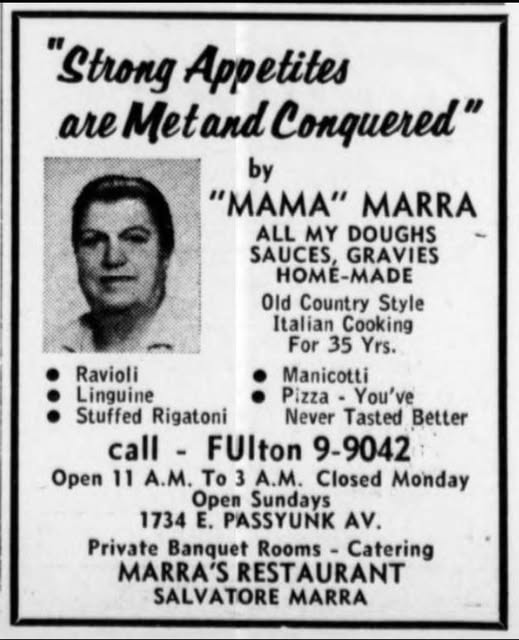
The neighborhood’s true gems are the businesses that have always been there. Pat’s Steaks at Passyunk and 9th Street opened in 1930. Their competitor, Geno’s, didn’t open until 1966. If you walked along East Passyunk Avenue in the 1950s or ’60s, you would have seen a thriving retail corridor known simply as “the Avenue.” Conversations were still sprinkled with Sicilian dialect. Families shopped here for bridal and Christening gowns, parochial school uniforms, furniture, jewelry, and floral bouquets. Some of those businesses, like Boystown Girlstown, Official School Uniform Outfitter at 1708 E. Passyunk, have been there for over 75 years. Other establishments that have stood the test of time are the “red gravy” restaurants offering a taste of home, including Marra’s (1734 Passyunk), Triangle Tavern (1338 S. 10th St.), and Victor’s Café (1303 Dickinson), all dating back more than 90 years. (Note: Marra’s recently closed, fear not, they are moving to a new location.)
By the mid-20th century, East Passyunk was predominantly Italian. In the 1970s, many residents left for new developments in southern New Jersey. In the 1990s, waves of Asian and Hispanic immigrants reshaped the neighborhood once again. Mexican, Thai, and Cambodian restaurants and bodegas began popping up throughout the area. A mural by the Mural Arts Project, “Aquí y Allá” at 1515 S. Sixth Street, tells the story of the neighborhood’s growing Mexican immigrant population. One of the newest communities in the neighborhood is Orthodox Jews, who in 2019 transformed the former Philadelphia Scooters at 1733 East Passyunk Ave. into a synagogue, the South Philly Shtiebel. At one time, there were 150 synagogues in South Philly; today, this is one of only two remaining.
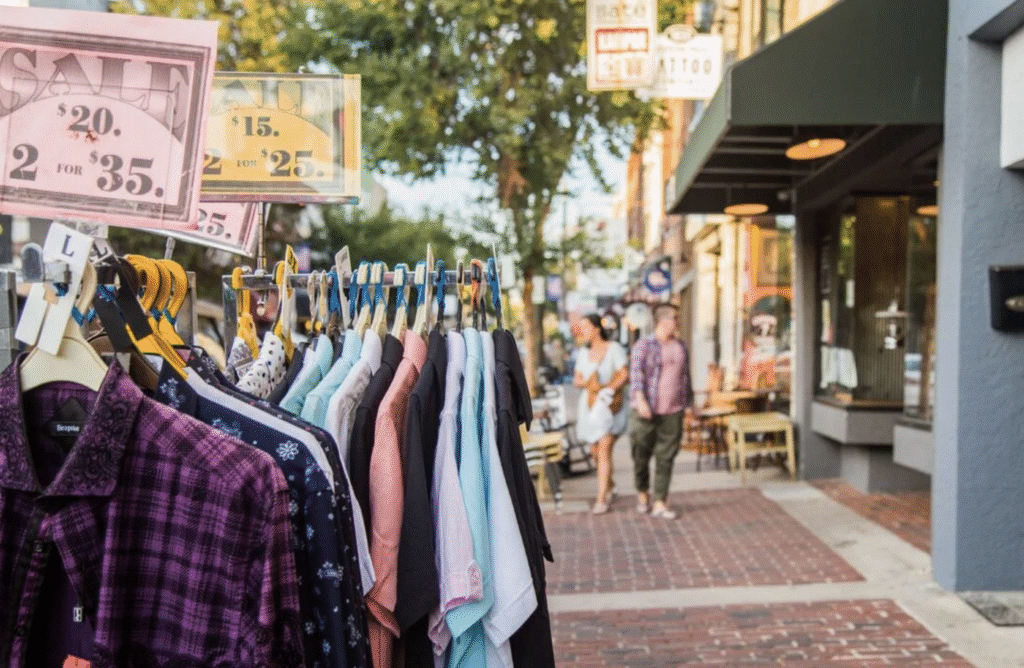
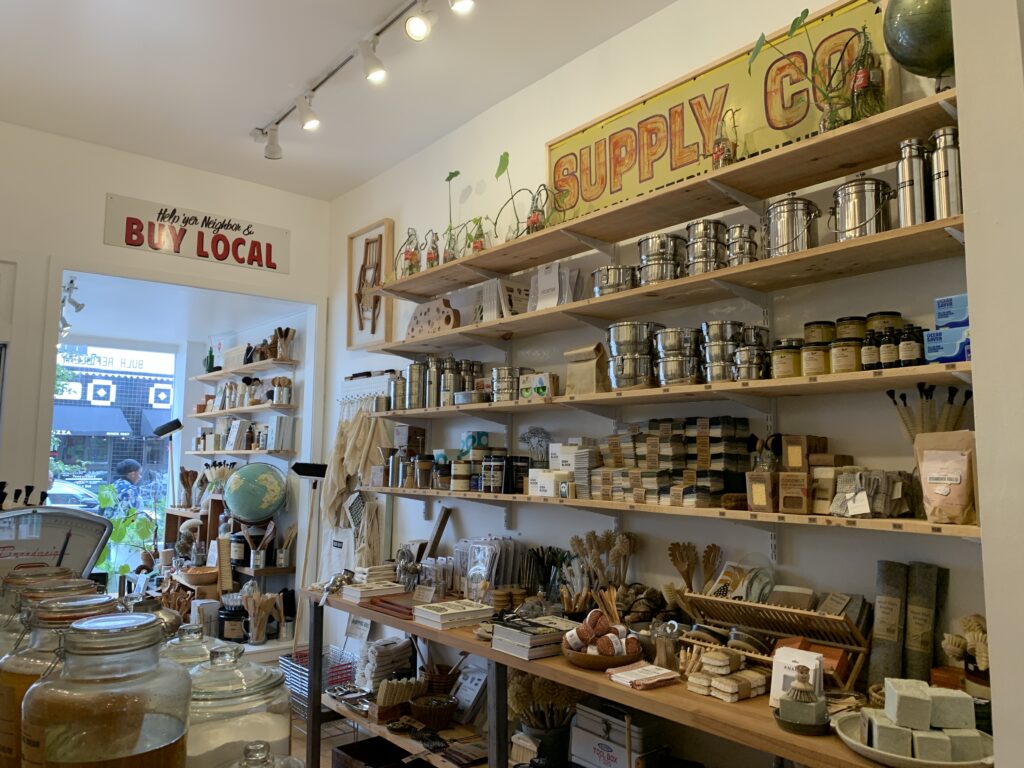
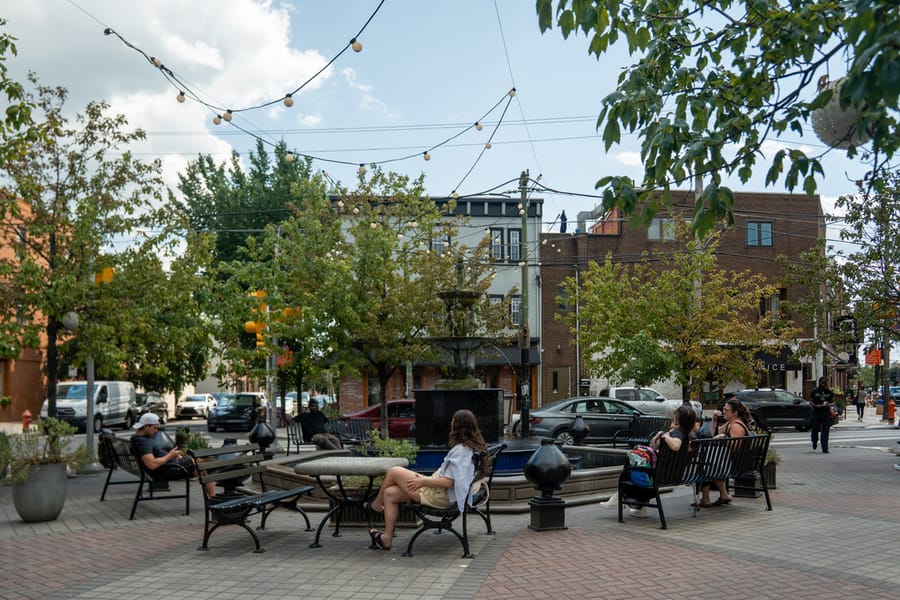
Like many former working-class neighborhoods, East Passyunk began transitioning into a more diverse, mixed-income community in the early 21st century as an influx of young professionals and new businesses arrived. The Passyunk Avenue Revitalization Corporation (PARC) serves a dual mission as a nonprofit real estate development and management company and as a public space enhancement organization. That includes upgrading the Singing Fountain’s plumbing. “We’re expanding the plaza while adding seating and greenery. The fountain’s audio plays Mario Lanza along with local artists,” said Alex Balloon, Executive Director of PARC. “Most of the properties we own are around the Singing Fountain. That includes restaurants like Mish Mish, River Twice, and Superette, a wine bar.” In warmer weather, Balloon says East Passyunk draws 55,000 pedestrians a week. Other great businesses in the area include Good Buy Supply, a sustainable zero-waste shop, and the South Philly Food Coop.
East Passyunk has always been a neighborhood defined by movement. Movement of people, of commerce, and of culture. From Lenni Lenape trade routes to immigrant row houses, from “red gravy” institutions to award-winning restaurants, its story is one of constant reinvention layered over deep roots. What was once farmland, then a factory district, and later a predominantly Italian neighborhood, is now a dynamic corridor where history and modern life intersect on every block.
That layered past is exactly what gives the East Passyunk neighborhood its energy today. The architecture tells one story. The murals tell another. The storefronts, some a century old and others brand new, continue to shape the next chapter.
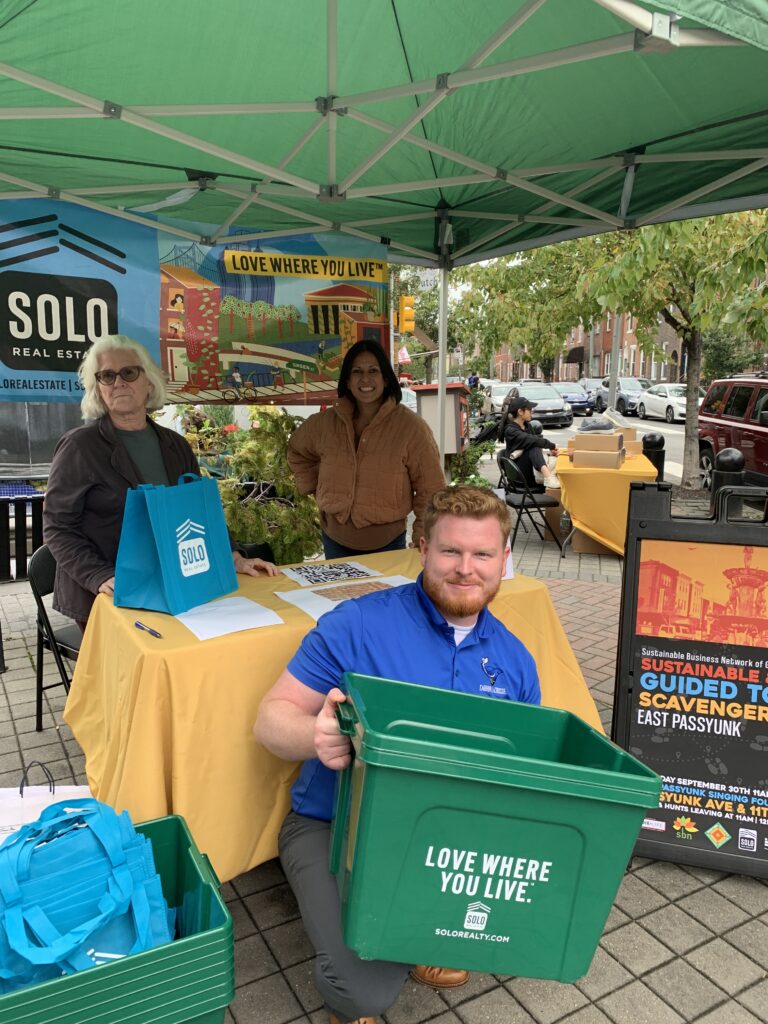
Solo encourages you to explore everything East Passyunk has to offer and, if you’re interested in becoming part of this evolving neighborhood, speak with a Solo agent about commercial and residential opportunities.