
philadelphia history
Philadelphia at 250: Revolutionary Sites, Stories, and Experiences



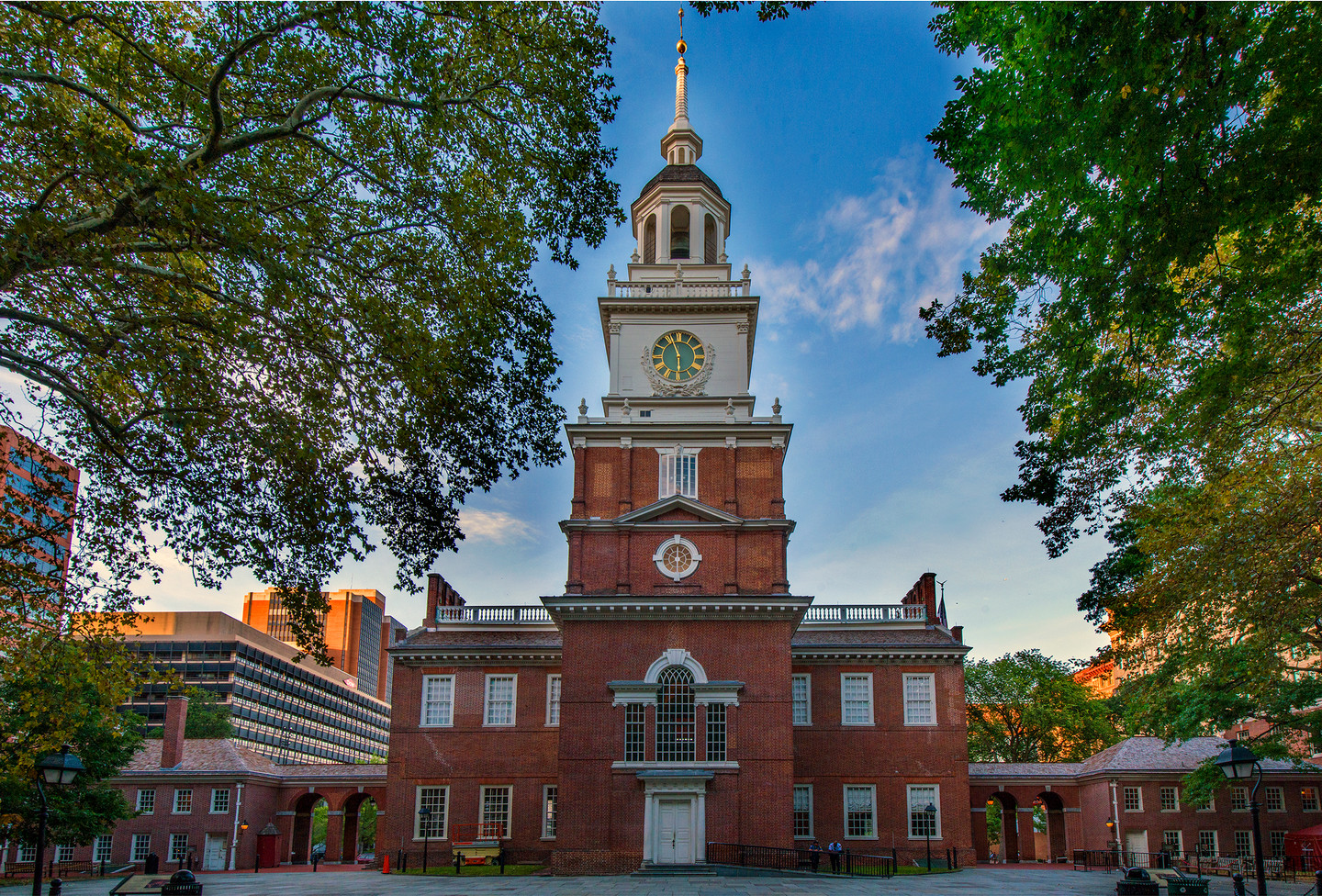
Independence Hall. Photo by R. Kennedy for VISIT PHILADELPHIA®.
No matter what slanderous lyrics Lin-Manuel Miranda has penned, when it comes to the American Revolution and its surrounding periods, we know well that it was Philadelphia, not New York, that was (and still is!) “the greatest city in the world.” Founded in 1682, Philadelphia’s position as a port city and central location in the context of the original thirteen American colonies, coupled with its quickly established manufacturing industry, quickly made this city not only the largest in America by 1776, but also an economic powerhouse. Philadelphia played a central role both in the incendiary events sparking the American Revolution, with our very own Independence Hall housing the first and second Continental Congresses from 1774 to 1777, and in the framing of our government, in both the creation of the American Constitution, and as the temporary capital of the nation after the war in 1783. Moreover, this city was the template for American institutions such as free lending libraries, volunteer fire brigades, the postal system, and so much more. Time, the movement of the capital to Washington DC (a sin which many Philadelphians will never forgive), and marketing campaigns for cities like New York, Los Angeles, Chicago, and Boston, have diminished Philadelphia in the eyes and minds of many. But we know how important our city was, and is, in the formation of our nation’s identity and history.
How to Experience Philadelphia’s Revolutionary Spirit in 2026
Now, with the 250th anniversary of the signing of the Declaration of Independence upon us, our city is opening its proverbial doors to a flood of visitors and celebrating, and revisiting, our critical part in the struggle for Colonial America’s independence from England and the role Philadelphia played, and continues to play, in the very definition of modern democracy and in the ever ongoing “American experiment”. But just like Parisians never visit the Eiffel Tower or spend time at the Louvre, many of us have never engaged with some of the many things that make our city such a space of revolution, historically and in a contemporary way. We can’t let the many tourists who pepper our streets have all the fun, especially not in this seminal year. Whether you’ve just moved to Philadelphia or lived here all your life, this is a phenomenal year to remind yourself that Philadelphia’s history as a revolutionary city lives in our present and can be our pathway to our future. So, in the spirit of loving where we live, we include for your consideration a list of places and experiences for you to visit and engage with to make your 2026 as revolutionary a year as living in Philadelphia deserves. While there is a large concentration of wonderful buildings and sites in and around Old City, those aren’t the only must-visit locations. After you’ve checked out the Museum of the American Revolution and acquainted yourself with the sights of Independence Park (specifically Independence Hall, Carpenter’s Hall, Franklin’s House Museum, and more!), Visit some of these other locus points to explore Philadelphia’s revolutionary past and today.
Roots of the Revolution: Bartram’s Garden
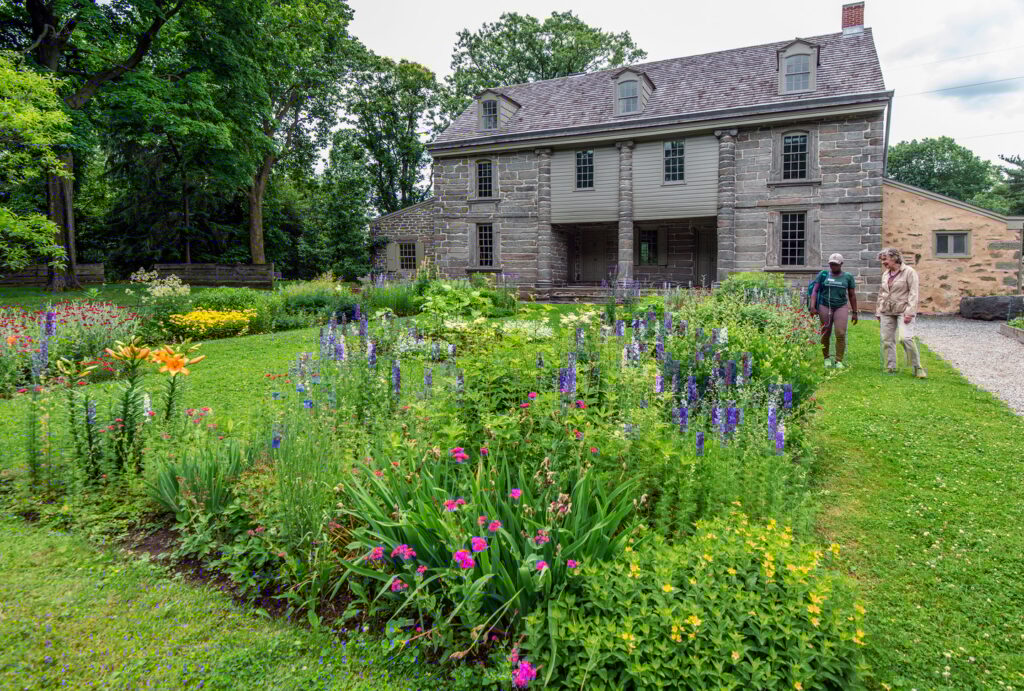
The oldest surviving Botanical Garden in North America, Bartram’s Garden, is also the site of the oldest archaeological findings in Philadelphia and was home to several groups of First Nations peoples, including the Lenape. By the 1640s, the area had been largely abandoned by the Lenape because of disputes between the Lenape and other First Nations peoples, and by 1648, the area became a colonial outpost of New Sweden. In 1728, John Bartram, a Pennsylvanian Quaker and horticulturist, purchased a tract of land in this region and began the cultivation of what would come to be known as Bartram’s Garden. Through his extensive travels across the country, and his relationships with prominent contemporary botanists, Bartram was able to gather and record hundreds of plant species, as well as cultivating many of them in the garden, including the Franklinia, a now extinct-in-the-wild tree native to Georgia, which Bartram’s Garden is credited with saving from total extinction. Pre-dating the American Revolution, this garden, as it exists today, celebrating the native plants of North America and the peoples and ecosystems that were present long before colonization, is an essential ecological context for Philadelphia as a revolutionary city. A must-visit, perhaps in combination with or addition to attending this year’s PHS Flower Show, whose theme is Rooted: Origins of American Gardening, would make an excellent complement to a day at Bartram’s.
Battles & Turning Points: Cliveden
A country house (back when Germantown was considered “the country”!) built for Benjamin Chew, who served as the Attorney General of Pennsylvania before the Revolution, and completed in 1767, Cliveden is not only a gorgeous example of the architecture and life in the pre and post Revolutionary war period, but it also serves as a jumping off point for exploring revolutionary Germantown, and memorializing the October 4, 1777 Battle of Germantown, in which Washington’s army suffered the third in a series of agonizing defeats (first at Brandywine and then at Paoli) against General Howe and the British Army. While the battle was disheartening, it was also the motivation for French financial and military support for the American army, which would ultimately pave the path to victory. After this battle, Washington retreated with his army to Valley Forge, spending the famously brutal winter regrouping. Cliveden provides excellent context and insights into many facets of the moment and the revolution. Additionally, the Revolutionary Germantown Festival, celebrating the anniversary of the battle, is a free event in October where you can visit Cliveden, enjoying the house and exploring the many lives that have passed through the area and the experiences of the revolution.
Endurance & Landscape: Valley Forge Park
Speaking of Washington’s Army, visiting Valley Forge National Park is an experience that combines exploring history and being in one of the most beautiful parks in our area. The park served as the encampment site of the Continental Army from 1777 to 1778 and is rich in history and natural splendor. In visiting, you can explore the encampment site, replete with reconstructed soldiers’ huts and earthworks fortifications. You can explore some of the 81 historic buildings in the park, like the Issac Potts House, Washington’s Headquarters, and buildings built after the Revolution, like Walnut Hill Barn, which holds stunning examples of 19th-century large-scale farming techniques. And you can immerse yourself in the natural world of the park, all 3500 acres of fields and meadows, floodplain forests and wetlands housing native plants, over 200 bird species, red foxes, moles, voles, and even coyotes. The park is ideal for hiking, biking, running, and even horseback riding, if you are of a mind to experience colonial life in the most immersive way possible, imagining yourself riding to inform colonial officers about the French supplies that would, in 1778, begin to turn the tide of the war. Go in the summer and enjoy the gorgeous landscape, go in the winter and experience the rough winter the Continental Army starved through (saved in the Spring by an early run of shad fish!).


Holding the Line: Fort Mifflin
Philadelphia’s only fort, Fort Mifflin, is also one of the only fully intact Revolutionary War battlefields and stands as a fascinating and visually lovely memorial to Philadelphia’s revolutionary past. Built by the British in the early 1770s, the fort was captured by the Continental Army and served as a furious and determined stand against British bombardments in 1777, where a scant force of 400 withstood daily attacks for six weeks, defeating British attempts to resupply their troops, stationed in Philadelphia, which the British had occupied. Bombarded by cannons daily, American forces worked each night to repair the damage and secure the fort. At the height of the bombardment, it is estimated that the British fired over 1000 cannonballs an hour at the fort, while the American forces remaining could only respond with scant ammunition, firing from a mere 10 cannons. Surrendering the fort in November of 1777, American forces set it on fire as they stole away on rowboats in the night, rejoining a group of Washington’s forces in New Jersey. The fort has served roles in every major military conflict the United States has been involved in since, and while there are many ways to explore it, the candlelight ghost tours might be an ideal version of historic exploration and thrills. Or, if you prefer a wild mix of historic periods (perhaps as a Dr. Who fan?) you might like a visit to the fort when it plays host to the Philadelphia Renaissance Fair. Not to be confused with its larger counterpart at Mount Hope, the Philadelphia faire is small but mighty, much like Fort Mifflin itself.
Revolution After Dark: A Man Full of Trouble
We talk a lot about experiencing history through facts and buildings. But experiential history is just as powerful and exciting, and reflects our experience living in this historic city. The revolution was born in America’s taverns, where ideas spread through printed pamphlets were discussed over rum and ale. When Benjamin Franklin first arrived in Philadelphia, fleeing his apprenticeship in Boston, he stayed in a riverside tavern that doubled as a lodging house. These were spaces of interaction, openness, a space for the common man and the aristocrat to meet, mingle, and consider a new kind of future for the nation. You can duplicate that experience, perhaps imagining a new future for our current country, over a drink or two at A Man Full of Trouble, the only pre-Revolutionary tavern remaining in Philadelphia. Built in 1759, and recently restored and re-opened, this tiny bar at 2nd and Spruce is a perfect place to rest your bones, enjoy local beers, wines, and liquors, and consider the very notion of revolution, what it meant in 1776, what it might mean today, and what it can mean for the future.