
gardening
The Urban Gardener’s Guide to Native Plants in Philadelphia




Pollinator Mix seed packets, courtesy of Solo Real Estate, are available during the 2025 season at the PHS Plant Swaps on South Street. Image: Sharon Tice DelCotto for Solo Real Estate.
Every year, Solo Real Estate gives away seed packets to clients, tenants, and neighbors at community events, PHS Plant Swaps, and from our Rittenhouse Square office. These seeds aren’t just gifts; they’re a reflection of our values as a company and our investment in the earth, starting right here in Philadelphia. That’s why this year, as part of our pollinator mix of seeds, we’ve included several native plant varieties, like purple coneflowers and bergamot.
Native plants, those that have grown in this region for thousands of years, aren’t just beautiful. They’re resilient, low-maintenance, and essential to local ecosystems. From feeding pollinators to supporting birds and acting as natural pest control, they are the building blocks of biodiversity in Pennsylvania.
Benefits of Native Plants
While all plant life has value, native plants, plants that have been growing in a given region for thousands of years, as opposed to plants that were introduced more recently to the environment, are naturally suited to the growing conditions of the region.
Unlike imported ornamentals, native plants are uniquely adapted to Philly’s long humid summers, heavy rains, and periods of drought. Once established, they require little maintenance, making them perfect for city gardeners with limited time or space. Just a few native plants on a South Philly patio or Center City balcony can create a safe refuge for pollinators and bring year-round beauty to your home.
They are essential parts of a larger ecosystem and the natural beauty of our city, making up the diets of important local insects and birds, and even acting as pest control. Native plants are essential to maintaining and preserving biodiversity and local food in Pennsylvania and the world. You can learn more about creating a pollinator-friendly garden on our blog.


In Pennsylvania, we are lucky to have a huge variety of native plants that grow beautifully here. However, because many gardeners and plant lovers have been steered towards certain trends in aesthetics and ideas of what plants make up a garden, many of these native plants have fallen into obscurity, becoming lesser known and ill-utilized despite their amazing ecological and aesthetic qualities. Getting to know the native plants you can grow and cultivate in our urban setting can revolutionize your mindset around what plants you want in your garden. Just a few native plants in a tiny South Philadelphia back patio or a balcony garden can help revitalize the bird and insect life in your area, as well as give you endless delight marveling at these hearty, gorgeous plant varieties!
Where to learn about and see Native Plants
First, it helps to get to know some of these native plants, and luckily, there are scores of places in the Philadelphia area where you can learn about these varieties..
- Awbury Arboretum (Germantown) – has a wide variety of wildflowers and shrubs.
- Bartram’s Garden (Southwest Philly) – historic gardens with native species.
- John Heinz National Wildlife Refuge at Tinicum (South Philadelphia) – wetlands rich in native plants.
- The Morris Arboretum (Chestnut Hill)– home to trout lilies, red twig dogwood, and more.
- Mt. Cuba Center (Delaware) – a botanic garden devoted to native plant conservation.
Mt. Cuba Center is a botanic garden devoted to the study and conservation of these native plant varieties. Here, Solo Real Estate Agent Jeff Carpineta completed the Ecological Gardening Certificate Program and has become an advocate for native plants throughout his work at The Emerald Wildflower Garden.
Native Plant Gardening for Ecological Repair
Jeff Carpineta’s journey with native plants began after a conversation with Kellyn Stefancin from Edge of the Woods Nursery. “Kellyn showed me a New York Times article by University of Delaware professor Doug Tallamy, author of Bringing Nature Home,” Carpineta recalled. “He mentioned the great work being done at Mt. Cuba, and I thought, wow, that place sounds amazing. I googled it on the spot, saw it was only 45 minutes away, and drove there. I ended up walking into a beginner’s class with Eileen Boyle. Eileen started the education program at Mt. Cuba after serving as Director of Horticulture at The New York Botanical Garden. She was so welcoming and inspiring.”
That visit left a lasting impression. “One major realization was just how much we have damaged the earth,” Carpineta said. “The education and the landscape there show what diversity, beauty, and ecological harmony existed before centuries of European settlement and development. For hundreds of thousands of years, the land was a symphony of interactions.”
Carpineta has carried these lessons into his work with The Emerald Wildflower Garden. “One mantra within the program and in ecological repair conversations across the nation is ‘right plant, right place,” he explained. “Every species introduced into the garden has to be carefully considered. How does it reproduce? Is it competitive? What birds and insects does it support? What time of year does it thrive or go dormant? Every choice matters,” said Carpineta.
For new gardeners in Philadelphia, Carpineta noted that many native plants are adaptable and thrive in urban settings. “Dozens of plants have found a home in the garden because many native species aren’t picky about soil composition,” he said. “Thriving right now are columbine, native honeysuckle, Atlantic ninebark, white and New England aster, dropseed prairie grass, milkweed, elderberry, woodland poppy, and, new this year, a large drift of monarda (bee balm). All of these plants are gems for insects and birds, and even ants. Some species reproduce through a process called myrmecochory, in which ants carry seeds underground to just the right place.”
Jeff Carpineta sums up his philosophy simply: “Our mantra at the garden is gardening for them. Who is ‘them’? The VIPs we’re thinking about first are birds, bees, butterflies, the Eastern gray squirrel, and, someday soon, we hope the Northern long-eared bat. Philadelphia and Philadelphians need to set the table for them. Planting native plants is one way to do that.”

Native Plants You Should Grow in Your Philadelphia Garden
Once you feel familiar with some of these plants or at least have taken the opportunity to visit some of Philadelphia’s gorgeous green spaces, it’s time to think about cultivating your own native plants. Here are some of the plants we recommend:
- Mountain Mint (Pycnanthemum muticum) Don’t freak out about mint. Yes, many mint varieties will take over your garden, but this native variety is quite contained and grows well in Philadelphia.
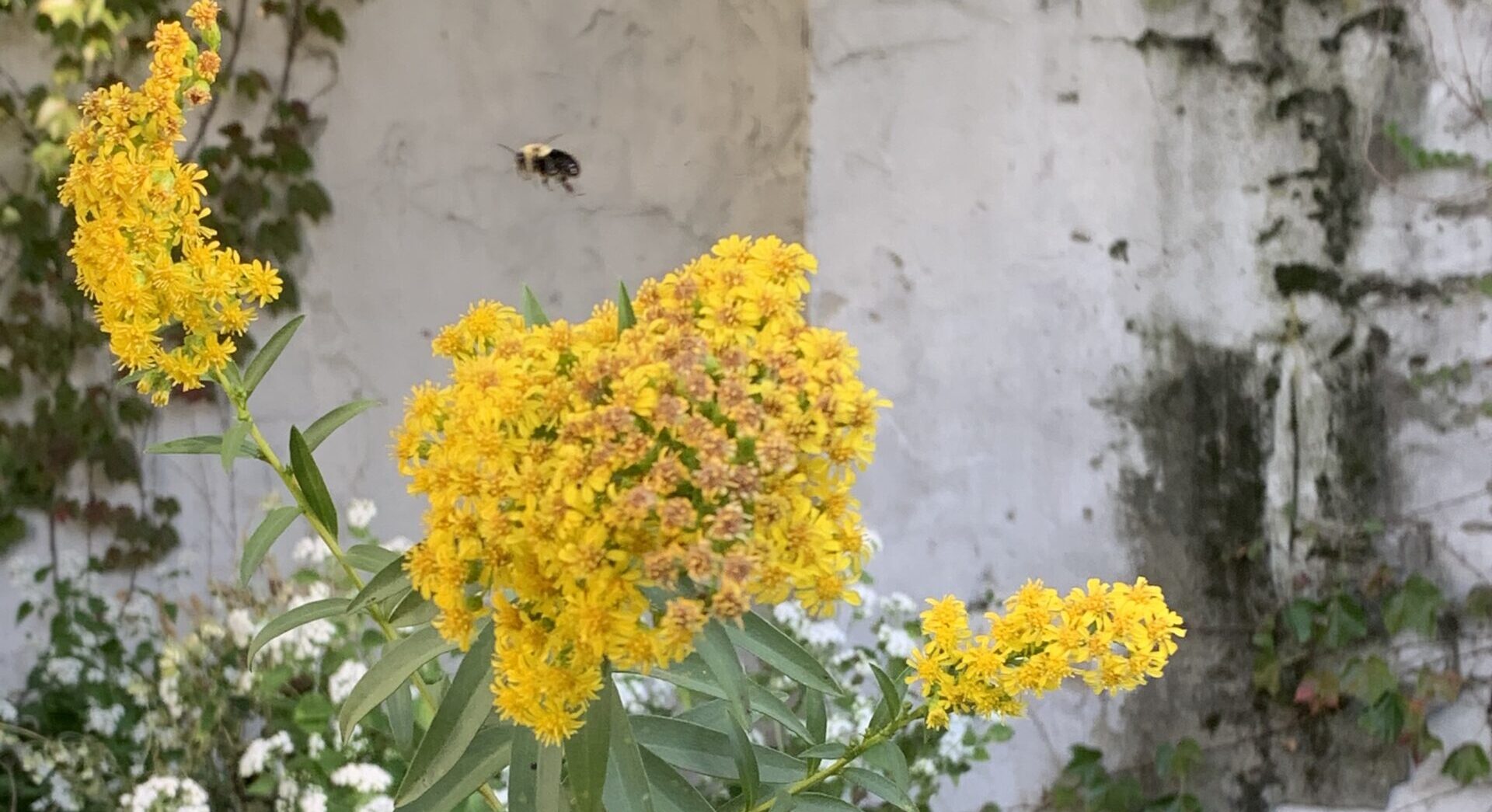
- Goldenrod (Solidago rugosa) is great for sunny spots.
- Virginia Bluebell (Mertensia virginica) is great for shade and an early bloomer.
- Butterfly Milkweed (Asclepias tuberosa) is drought-resistant and attractive to monarch butterflies.
- Philadelphia Fleabane (Erigeron philadelphicus) has lovely purple flowers
- Black Eyed Susans (Rudbeckia fulgida) have gorgeous yellow flowers and were one of the free seed packets Solo gave away a few years ago. These plants thrive and make your garden glow with color.


Late Summer & Fall Native Plants
As summer winds down, many gardens start to fade in color, but native plants keep the show going well into autumn. These late-blooming varieties provide critical food sources for migrating butterflies, hungry bees stocking up for winter, and birds seeking seeds. They also bring vibrant color to city gardens just when many non-native ornamentals have stopped blooming.
- Sky Blue Aster (Symphyotrichum oolentangiense) – Late-season plant for a shaded area. Great host plant for Pearl Crescent butterflies.
- Blazing Star (Liatris spicata) – more like a firework than a star, these purple beauties do wonderfully in full sun. The tall spiky purple blooms provide nectar for migrating Monarchs.
- Joe-Pye Weed (Eutrochium purpureum) – Large pink flower clusters, host for several moth species, and a magnet for butterflies.
Learn More: Additional Native Plant Resources
If you’re looking to buy native plants and support a small Philly business, check out Good Host Plants, a native plant nursery with local genetic provenance. Their website offers useful native-plant guides, and they provide easy curbside pickup or delivery in the area
To dive deeper, you can also explore resources like phillynativeplants.org and Penn State Extension’s native plant guides. You can also stop by an upcoming PHS Plant Swap on South Street during the season (Tuesday, September 9 or Tuesday, October 7) to connect with Pennsylvania Horticultural Society staff and even chat with Jeff about native plants in person.
Planting natives is more than a gardening choice. It’s an act of ecological repair and love for Philadelphia. With every seed, you’re helping to restore balance, attract pollinators, and make the city greener for generations to come.