
agents
How Sim Safer Brings Health, Sustainability, and Design Thinking to Philadelphia Real Estate




Images by Ben Abrams for Solo Real Estate.
Agent Simran “Sim” Safer didn’t come to real estate through a traditional path. Before joining Solo Real Estate, she built a foundation in health sciences, trained as a Vinyasa yoga instructor at Monarch Yoga in Northern Liberties, and pursued advanced study in sustainability — including certification as a WELL Accredited Professional — allowing her to evaluate homes not just as assets, but as systems that directly affect quality of life. That blend shows up in her career today, with a focus on how homes shape daily experience, from air quality and natural light to stress levels, movement, and overall rhythm of how people live inside them.
Why should sustainability matter?
“Sustainability is inseparable from well-being — and that’s not abstract. It’s physiological,” said Sim, who has a Master’s in Health Communications from Tufts, Certification in Design for Sustainability from Weitzman School of Design at Penn, and in Sustainability Leadership from Thomas Jefferson School of Architecture.
“A sustainably designed home is almost always a healthier one: better air quality, more natural light, superior thermal comfort, lower energy costs, materials that don’t off-gas, and a closer relationship to nature and community. These things have a direct impact on your health,” she said. “Traffic density, construction debris, noise pollution, heat island effects, lack of tree canopy — these create cumulative, measurable stress loads on homeowners. Conversely, environments designed around human health actively support calm, movement, connection, and restoration.”
“Buyers are beginning to ask harder questions about development itself, not just what is being built, but how, and whether the process is protecting the health and character of communities already rooted there. That’s a conversation I welcome,” said Sim, who grew up in London before living in Boston, New York City and Philadelphia. Her international background and fluency in English, French, Punjabi, and Spanish give Sim insight into Philly’s diversity.
When she arrived here in 2022 and started looking for a home with her husband and young son, Sim gravitated to Northern Liberties, Fishtown, East Kensington, and Olde Kensington. “They reminded me of my childhood in London with cafés tucked into residential streets, corner shops, parks that felt genuinely used, small daily exchanges happening at street level,” she said. “Fishtown and Kensington especially remind me of Shoreditch or Hackney before they were polished smooth,” she said. “There’s still texture there, industrial bones, independent businesses, creative energy, and visible community life.”
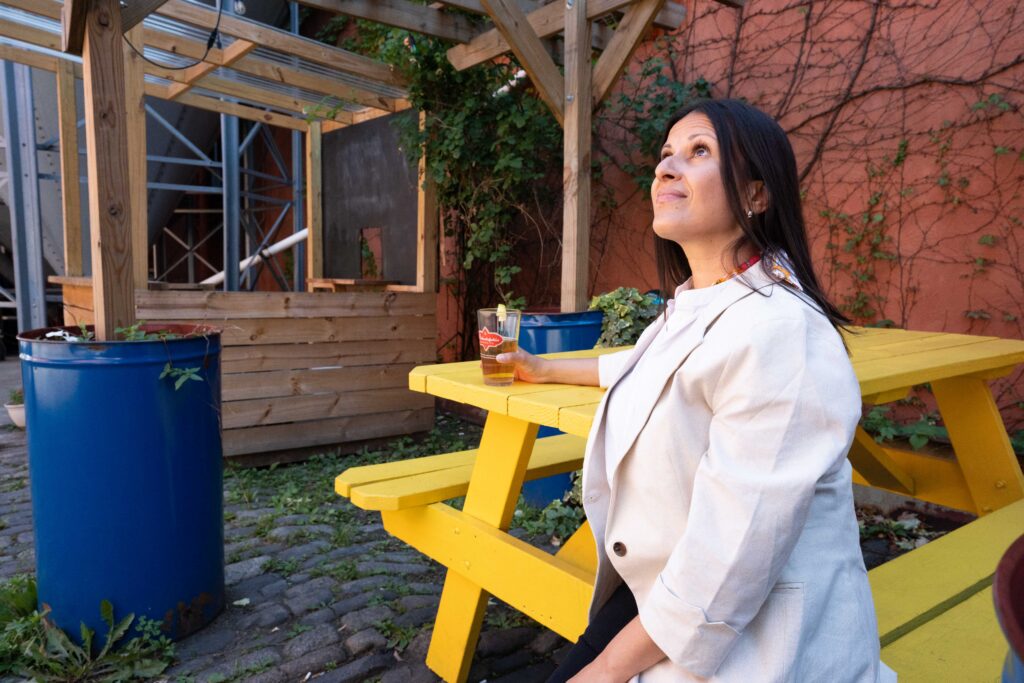
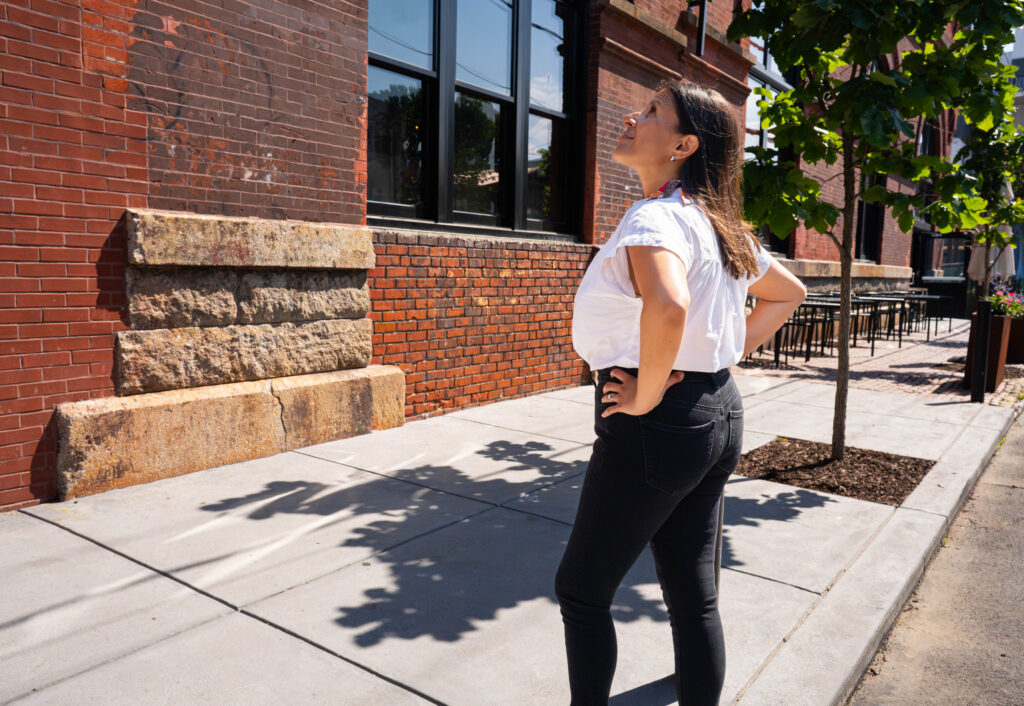
Sim and her family bought a condo in South Kensington. “We wanted a place we could grow into, adapt over time, and eventually rent out as our family evolved,” she said. “Living here deepened my thinking about what it means to contribute to a neighborhood rather than simply occupy it. I spent nearly a year advocating for planting trees on our block because I believe even modest environmental changes ripple through a community’s experience. Trees soften noise, slow traffic, create shade, invite walking, and signal to the nervous system: this is a place worth pausing in.”
The Health and Home Connection
“The pandemic changed the purpose of a home. It stopped being just a shelter and became a workspace, gathering place, and recovery space simultaneously. That’s a lot to ask of 1,200 square feet!” said Sim. “I’m also seeing a much deeper attention to sensory experience through natural light, airflow, greenery, street-level activity, and acoustic quality. These aren’t aesthetic preferences. They’re physiological ones. They shape how we feel, think, and recover every single day.”
Sim says square footage isn’t as important as healthy design. “After working alongside architecture firms to ensure designs center on human health and well-being, I’ve seen the most remarkable transformations happen within modest square footage,” she said. “When a space is thoughtfully proportioned, well-lit, oriented toward the life happening outside its windows, it doesn’t feel small. It feels exactly right. The magic isn’t in the size. It’s in the intelligence of the design and the richness of what surrounds it.”
“Cosmetic details are temporary. Paint, finishes, hardware evolve, but the orientation of a building, the acoustic character of a block, the quality of morning light, those are structural. They stay.”
“Because buying a house or condo is so emotional, I always counsel patience. The right place reveals itself when you’re moving from a place of clarity, not urgency. There is rarely a reason to rush, and the decisions made in haste are the ones people most often revisit with regret,” she said.
Before making a final decision, Sim recommends visiting the property at different times. “Walk the streets at different hours. Get coffee nearby. Sit in the park. Notice how you feel — not just what you think. Your nervous system is observing light levels, noise, pace, air quality, and social density constantly, often before you have consciously processed any of it,” she said. “Compare traffic at 8 am versus 8 pm. How a corner feels on a Saturday afternoon versus a Tuesday morning.”
If you have children, include them in the decision,” said Sim. Children are often the truest measure of a neighborhood’s vitality. They experience cities at eye level, at the scale of a front stoop, a sidewalk tree, a corner where someone knows their name. Walkability and familiarity give children a felt sense of safety and belonging that stays with them.

“My role isn’t to move people quickly toward a transaction — it’s to help them find a place where they can thrive,” she said.
At the core of Sim’s work is a simple guiding principle: a home should support the life you want to build in it. She encourages clients to slow down, observe, and think beyond finishes or square footage, focusing instead on how a space feels across different times of day, how a block functions, and how a neighborhood supports everyday life. For Sim, real estate is not just about finding a property, but about helping people make grounded, informed decisions that align with their health, values, and long-term goals.